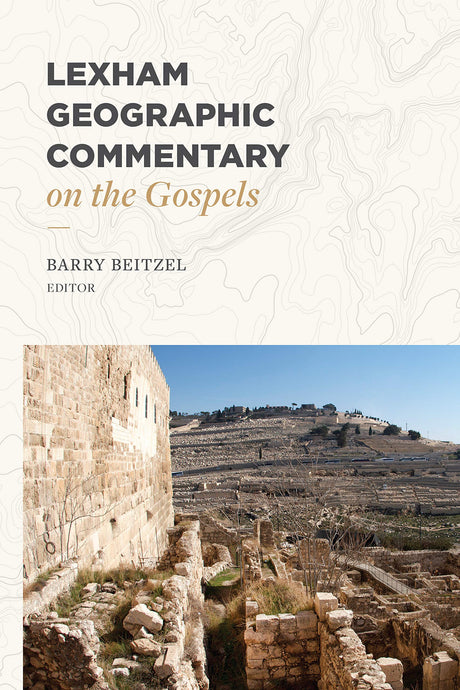
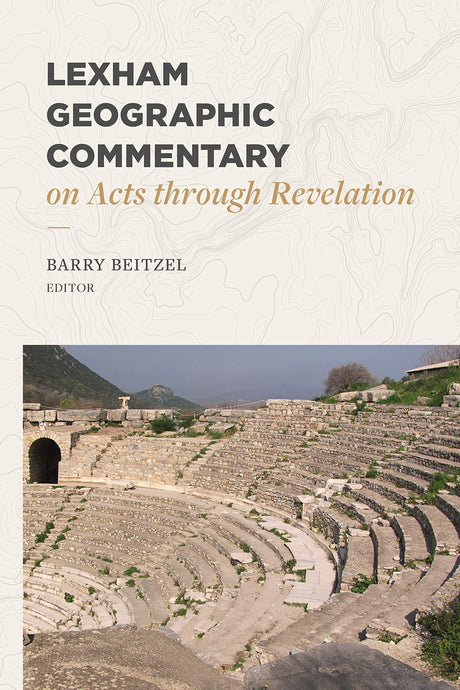
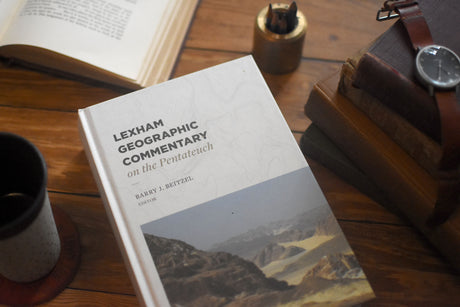
Lexham Geographic Commentaries (4-Volume Set)
Lexham Geographic Commentaries
Geography is a central concern throughout Scripture, but the full significance of the geographical context is easily overlooked without a familiarity with the places, the relative distances, and the ancient setting. The Lexham Geographic Commentaries will not only place you in the sandals of the ancient writers of Scripture, but they will explain the significance of the geographic details in the biblical text for your life today.
-
Cover TypeHardcover
-
ISBN
-
Weight12.47 lb
-
PublisherLexham Press
Included in this set
-
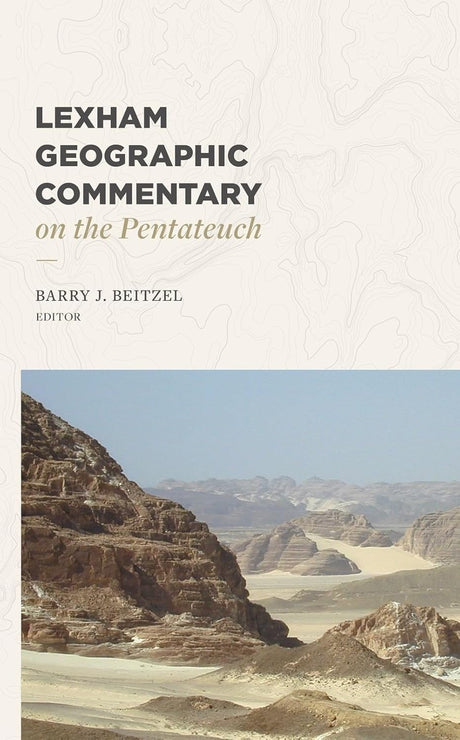
Lexham Geographic Commentary on the Pentateuch
Beitzel, Barry J (editor)
$36.99$59.99Unit price /UnavailableIn stock -
Lexham Geographic Commentary on the Historical Books, Volume 1: Joshua-Ruth
Beitzel, Barry J (Editor)
$33.99$54.99Unit price /UnavailableIn stock -
Lexham Geographic Commentary on the Gospels
Beitzel, Barry (editor)
$33.99$54.99Unit price /UnavailableIn stock -
Lexham Geographic Commentary on Acts Through Revelation
Beitzel, Barry J (editor)
$33.99$54.99Unit price /UnavailableIn stock
Endorsements (14)
“What a resource! Whether you study the Bible, teach or preach it, or are planning to do a movie where you need to understand how people lived, the Lexham Geographic Commentary on Acts through Revelation is a treasure trove of information about first century life. This is up to date and full of detail that not only will inform you but fascinate you as well. Just very well done.”
See AllDarrell Bock
Senior Research Professor of New Testament, Dallas Theological Seminary
“Most New Testament professors are at best amateurs when it comes to geography and archaeology and for many of us the geographical information is inaccessible, but the Lexham Geographic Commentary on Acts through Revelation brings it all together. Just what Bible readers, pastors, and professors need! An abundance of images, excellent scholarly descriptions and narratives, and first-rate scholarship all bundled into an accessible format. I will not study any book from Acts to Revelation without having this volume at my side.”
See AllRev. Canon Dr. Scot McKnight
Professor of New Testament, Northern Seminary
“The Lexham Geographic Commentary on Acts through Revelation is a worthy sequel to the award-winning Lexham Geographic Commentary on the Gospels. Over fifty entries by a range of scholars offer valuable insight into the geographical, social, and historical context of the book of Acts, the New Testament letters, and Revelation. An incredible amount of information that enables students to better understand the New Testament is available in this volume. Interspersed throughout are photographs, illustrations, and maps that enable the reader better to grasp the points being made in the text.”
See AllDouglas J. Moo
Wessner Chair of Biblical Studies, Wheaton College
“Because the Bible, more than any other holy book, roots its revelation of the Creator in identifiable time and space, the geographic context of the biblical message is of the greatest importance. This means that this series, and particularly this volume on the Pentateuch, is extremely valuable to the student of the Bible, not only in its articles dealing with specific geographic data and locations, but also with the larger geographic issues. Highly recommended.”
See AllJohn N. Oswalt
Visiting Distinguished Professor of Old Testament, Asbury Theological Seminary
“In Scripture, especially in the Pentateuch, land is not only a grand theme but part of its message, with a knowledge of the geographic setting often yielding greater perception of a story’s significance. With stunning visuals and insightful discussions from top-notch scholars, the Lexham Geographic Commentary on the Pentateuch is a much-needed resource that all Bible students, scholars, and pastors will want on their shelves.”
See AllL. Michael Morales
professor of biblical studies, Greenville Presbyterian Theological Seminary
“The Lexham Geographic Commentary on the Pentateuch is a robust addition to the library of anyone serious about the historicity of the biblical text. I am delighted that such a robust resource exists! It assembles the best of evangelical scholarship on places mentioned in the Pentateuch. The essays are beautifully illustrated with photographs, artwork, charts, maps, and diagrams to help readers visualize the biblical context. Linguistic, cultural, historical, archaeological, and other resources are brought to bear on the text as the authors engage with critical perspectives and weigh various proposals. Each essay begins with a summary of key points and closes with a bibliography of relevant sources. This book will be a significant help to me in my own research and teaching.”
See AllCarmen Joy Imes
associate professor of Old Testament, Talbot School of Theology
“A great number of the skills that contribute to solid biblical interpretation involve considering a text in one or another of its various contexts—linguistic, literary, historical, social, cultural, rhetorical, intertextual. But how often do we give adequate attention to the geographical and archaeological contexts of the events about which we read or the settings in which Jesus was raised, taught, acted, died, and rose again? This distinctive and clearly-focused commentary is replete with solid information about those geographical and archaeological contexts, and with connections to the Gospel texts (ranging from the secure to the suggestive, but always stimulating), that will admirably help us keep those physical contexts in view as we read, interpret, teach, and preach from the Gospels.”
See AllDavid A. deSilva
Trustees’ Distinguished Professor of New Testament and Greek, Ashland Theological Seminary
“This commentary focuses on the nexus of space, sociology, and theology as reflected in the Gospel text. Highlighting the socio-spatial background of each pericope enhances exegesis. This is especially true in the Gospels where the narrative shifts from place to place. The Lexham Geographic Commentary should be part of every Bible students' library.”
See AllPhilip Comfort
visiting professor, Religion, Coastal Carolina University
“It is very rare for me to say in an endorsement that a work is “invaluable” and a “must purchase,” but this is one of them. As one who has been writing commentaries for over thirty years, my only question is why someone didn't think of this a long time ago. Once I have this in hand, I will never write anything without consulting this “geographical commentary.” I find it equally essential on general background issues as on geography itself. I am very impressed and cannot wait to start using it. Thank you, Barry, and thank you, Lexham Press!”
See AllGrant Osborne
Professor Emeritus, Trinity Evangelical Divinity School
“The role of geography is the most significant dimension of any of the realia found in the early historical books, above all in Joshua. This review, update, and significant contribution to the geographical study of these biblical books and to the value of that study for interpretation of their message is a welcome addition to current scholarship. Every serious interpreter of Israel’s story, from its entrance into the land at the fords of Jericho to the love story of Ruth and its picture of early Israelite village life in Bethlehem, will find this work an essential asset for understanding these biblical texts.”
See AllRichard Hess
distinguished professor of Old Testament and Semitic Languages, Denver Seminary, Colorado
“Historical record or folktale including poetry or prophecy―opinions may differ over how best to evaluate the books covered by this commentary. But their geographical setting remains fixed and constant, and a galaxy of specialists here unpacks those details with full attention to texts and archaeology in a manner not paralleled in any other available resource. Ease of reference is aided by a plethora of exceptionally clear maps and other illustrations. It helpfully serves to remind us that biblical literature of all kinds is firmly grounded in space and time.”
See AllH. G. M. Williamson
Emeritus Regius Professor of Hebrew, University of Oxford, United Kingdom
“Geography often seems to be the weak step-sister of archaeology in biblical studies, so this thoroughgoing study of the geography of the Old Testament historical books is certainly in order. It will add perspective to any study of the biblical books covered here. And a welcome serendipity is that it is also a valuable resource for matters of archaeology, backgrounds, apologetics, and even exegesis. I recommend it highly!”
See AllDavid M. Howard, Jr.
professor of Old Testament, Bethlehem College and Seminary, Minnesota
“This volume properly highlights the foundational, though often overlooked reality of the physical settings upon which the events recorded in the biblical text unfolded and which influenced the biblical authors’ narratives and poetry. By providing layered approaches to discreet corpora of texts from Joshua through Ruth, the contributors ground theological claims, provide guidance and parameters for text-critical interpretations, and offer much needed nuance that corrects more dogmatic and/or text-only studies that fail to appreciate the importance of geography for the biblical authors’ truth claims. This volume tackles the biggest issues in the historicity of ancient Israel’s story by integrating detailed understanding of the region’s geography, the available archaeological remains, and philologically informed discussions of the Hebrew language. The results are nuanced, refreshing, and, at times, novel interpretations of the biblical texts that are attuned to text-critical and theological matters.”
See AllKyle Keimer
honorary senior research fellow in the archaeology, history, and language of ancient Israel, Macquarie University, Australia
“The Lexham Geographic Commentary on the Historical Books continues the important approach to biblical interpretation found in the previous volumes of this project. The geographic setting in historical context is a crucial element in the interpretation of the biblical narratives, since the stories assume the implied readers’ knowledge of locations, topography, etc., as these impact the events that the stories narrate. This commentary successfully addresses this concern. Throughout the volume, the understanding of the individual narrative episodes is greatly enriched through a solid analysis of the geographic and cultural data. Readers will benefit from its wonderful maps, photos, and illustrations. It is an important contribution to the understanding of this portion of Scripture.”
See AllK. Lawson Younger, Jr.
professor emeritus of Old Testament, semitic languages, and ancient near eastern history, Trinity Evangelical Divinity School, Illinois